Loading... Please wait...
Live Support

Our Newsletter


Thermal Paste Comparison - Best Overall Results (Shin Etsu G751)

Posted on 24th Oct 2011 @ 3:35 PM

Source: http://www.techwarelabs.com/reviews/cooling/thermal_paste/index.shtml

Online Order: http://www.moddiy.com/products/Shin%252dEtsu-G%252d751-High-Performance-Thermal-Compound-%283g%29.html

t2hobgxajdxxxxxxxx-84297207.jpg

Introduction

Thermal paste is usually an overlooked, but essential component of any modern computer system. Back in the days of 75 - 500 MHz CPU's, the heatsink could be mounted directly on the processor and no one gave head a second thought. Systems were nearly silent, with only a minute fan (if any) placed on the CPU. In all reality, the hard drive usually made more noise than the HSF did.

The CPU cooling situation is very different now. Although thermal paste has been used since the inception of devices that output heat, the demand for high-efficiency thermal compound for CPU cooling is a recent development. Today's processors generate so much heat that they will literally smoke if left without a heat sink for more than even a few seconds. The days of passive heatsinks are gone, unless a revolution in technology, that radically reduces the output wattage of processors, sweeps through the market. In the wake of passive heatsinks much more elaborate means of cooling CPUs have been created. These means include traditional heatsinks engineered to displace as much heat as possible, water-cooling solutions, phase change devices, and peltier coolers, to name a few. Along with all of these methods of keeping the fiery beast at the heart of your computer tame, comes the use of a "Thermal Interface Material," (TIM) which is more commonly known as thermal paste.

While most of these substances do resemble a paste-like consistency, a few do not. TIM's include the thermal pad that Intel and AMD include with their retail packages and also some more liquid-like substances available from many vendors on the internet.

Seven of the most popular cutting-edge thermal pastes available at the time of this review have been compared.

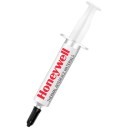
Shin Etsu G751

A particularly rare thermal compound in the United States, which is manufactured in Japan by a company called MicroSi [Shin Etsu Chemical]. Documents concerning the actual composition and thermal conductivity are not available at this time.

The Test - Heat Sink

Product: Idle Day 1 Load Day 1 Idle Day 2 Load Day 2 Idle Day 3 Load Day 3
Nanotherm Blue II 42C 46C 42C 46C 41C 46C
Nanotherm Silver XTC 40C 45C 41C 46C 41.5C 45C
Nanotherm PCM+ 40C 46C 41.5C 44.5C 40C 44C
Arctic Silver 3 41C 45C 41C 45C 40.5C 44.5C
Silver Grease 45C 55C 45C 54C 45C 54C
Shin Etsu G751 41C 45C 40.5C 44.5C 39.5C 43C
Silicone Compound 47C 60C 47C 60C 47C 60C

As expected, several of the thermal pastes are very close in their performance. The overall best performance is given when the G751 is used. The PCM+ and AS3 are nearly tied at the end of 3 days, and are both excellent choices for a thermal compound.

The Test - Water Cooled

Product: Idle Day 1 Load Day 1 Idle Day 2 Load Day 2 Idle Day 3 Load Day 3
Nanotherm Blue II 39C 44C 38C 43.5C 38C 42C
Nanotherm Silver XTC 38C 43.5C 38C 42C 37.5C 42C
Nanotherm PCM+ 38.5C 42C 37C 42.5C 37C 41C
Arctic Silver 3 39C 43C 39C 43C 38C 42.5C
Silver Grease 43C 52C 43C 51.5C 43C 50C
Shin Etsu G751 39.5C 42.5C 38C 41C 37C 40C
Silicone Compound 45C 55C 45.5C 54C 45C 53C


These results revealed no clear winner. Overall, the Shin Etsu G751 comes out ahead, but only by one degree. Information on this compound available on the internet would suggest that it takes some time to set in and reach its final resting point. 

Overall Conclusions

Shin Etsu G751:With its application being the primary detractor, this paste simply does return the best results on straight water-cooled or heatsink fan assemblies. The temperature steadily decreased over the period of three days and I am left wondering if it would continue to drop, if I had left it on for an extended period of time. If application is an issue, I suggest that users apply the compound to the heatsink or the bottom of the waterblock instead of applying to the core. The larger work surface makes the task much less daunting.

If availability was not an issue in the U.S., and you want the best results in water-cooled and heatsink installations, I would recommend Shin Etsu G751 for its outstanding performance. That being said, let's move on to the choices in each category.

-Best Overall Results: Shin Etsu G751

Shin-Etsu G-751 High Performance Thermal Compound (3g)

Get it now at http://www.moddiy.com/products/Shin%252dEtsu-G%252d751-High-Performance-Thermal-Compound-%283g%29.html